

In website communication experiences, human agents always play an irreplaceable role. A multi-agent customer service system helps human agents handle complex issues more efficiently by intelligently distributing conversations and providing supportive tools. This article answers, in a direct Q&A format, which issues are suitable for human agents and why businesses need to deploy a multi-agent customer service system.
What is a Multi-Agent Customer Service System?
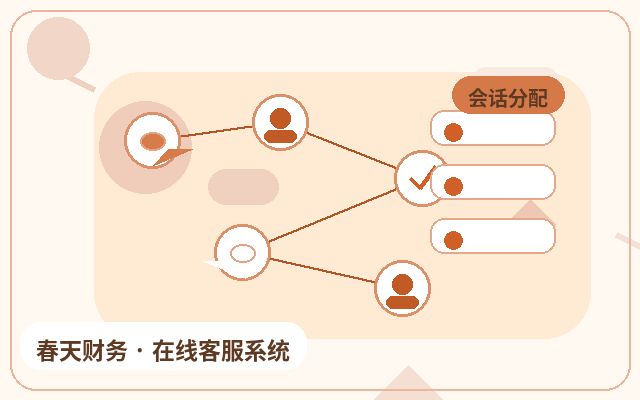
A multi-agent customer service system is an online customer service platform that supports multiple agents logging in simultaneously and collaborating to serve customers. It typically includes features such as conversation distribution, knowledge bases, ticket management, and data analytics, enabling teams to centrally manage inquiries from channels like websites, apps, and mini-programs.
Simply put, it solves the problem of "one person being overwhelmed, while multiple people create chaos" by automatically assigning customers to the most suitable agent based on rules.
Which Businesses Need a Multi-Agent Customer Service System?
When organizing articles about multi-agent customer service systems, it's more important to focus on whether the reception process is smooth, inquiry records are complete, and subsequent collaboration is convenient.

Any team that needs to handle multiple customer inquiries simultaneously while maintaining service quality can benefit from it. Typical scenarios include:
- E-commerce and Retail Businesses: High pre-sales inquiry volume requires quick responses while handling order tracking and after-sales issues.
- SaaS and Software Companies: Complex technical issues from customers require professional customer service or technical support intervention.
- Education and Training Institutions: Course inquiries, enrollment processes, refund issues, etc., need to be shared among multiple agents.
- Traditional Manufacturing and B2B Companies: Lead handling for inquiries, quotes, sample requests, etc., requires human agent follow-up.
Why Do Businesses Need a Multi-Agent Customer Service System?
The core reason is: Human agents are best suited for handling issues that require judgment, empathy, and flexible responses. Automated replies can handle standard questions, but in the following situations, human intervention is essential:
- Complex Inquiries: Customers have multiple questions about products or services, requiring agents to explain each one.
- After-Sales Disputes: Issues like returns, exchanges, complaints, and compensation that require negotiation and resolution.
- High-Value Lead Conversion: Potential customers show strong purchase intent, needing human follow-up to close the deal.
- Personalized Needs: Customers request custom solutions, special discounts, or non-standard services.
- Emotional Support: When customers are dissatisfied or anxious, human agents' empathy can effectively ease tensions.
A multi-agent customer service system, through intelligent distribution, conversation transfers, and knowledge base support, allows human agents to focus on these high-value tasks instead of repeatedly handling simple, repetitive issues.
Common Features of Multi-Agent Customer Service Systems
The table below lists key features that support human agents in working efficiently:
| Feature Module | Benefit for Human Agents |
|---|---|
| Intelligent Distribution | Automatically assigns customers based on skill or workload, reducing wait times |
| Knowledge Base | Quickly retrieves standard answers, improving response consistency and speed |
| Conversation Transfer | Transfers issues to more suitable colleagues, avoiding customer repetition |
| Ticket Management | Tracks progress on complex issues, ensuring nothing is missed |
| Data Analytics | Analyzes reception volume, satisfaction, conversion rates, etc., to improve service |
| AI-Assisted Replies | Automatically generates suggested responses, which agents can quickly modify and send |
Basic Steps to Deploy a Multi-Agent Customer Service System
Deploying a system is not complicated and typically involves the following steps:
- Needs Assessment: Determine the number of agents needed, main reception channels, and desired features.
- System Selection: Choose a system that supports multiple agents, is scalable, and has transparent pricing.
- Installation and Configuration: Embed the code into your website or app, set up distribution rules and automated replies.
- Agent Training: Familiarize team members with backend operations, knowledge base usage, and data viewing.
- Pilot and Optimization: Test with a small scope to adjust distribution rules, then fully launch after ensuring stability.
For small and medium businesses with limited budgets, products like Spring Online Customer Service System offer a solution starting at $25/month with unlimited agents, supporting AI automated reception and lead capture, with WeChat notifications upon successful lead acquisition, making it suitable for quickly setting up a customer service system at low cost.
Frequently Asked Questions
How do human agents and automated replies divide tasks?
Automated replies are suitable for handling common questions (e.g., business hours, price inquiries), while human agents handle complex, emotional, or high-value inquiries. Systems typically allow setting keyword-triggered automated replies while retaining manual takeover capabilities.
How much efficiency can a multi-agent system improve?
Efficiency gains depend on team size and configuration. With proper conversation distribution, average response time can be reduced by 30%-50%, and customer satisfaction also improves. Actual results should be evaluated based on your own data.
Is a multi-agent system necessary for small teams?
Even with just 2-3 agents, a multi-agent system helps record conversations, track workload, and prevent missed inquiries. As the business grows, the system can scale smoothly without needing redeployment.
Conclusion
Human agents are best suited for handling issues that require judgment, empathy, and flexible responses. A multi-agent customer service system, through intelligent distribution, knowledge bases, and ticket management, allows teams to focus on these high-value tasks. Choosing the right system not only improves reception efficiency but also enhances customer experience and inquiry conversion. When selecting a system, businesses should consider feature completeness, pricing transparency, and ongoing support to ensure the system is effectively implemented and delivers results.