

When a business considers introducing an AI + human customer service system, it often faces a series of questions: What exactly is it? How does it integrate with existing workflows, especially instant notifications? What preparations are needed before deployment? This article provides a clear pre-deployment guide around these core issues, focusing on how the customer service system collaborates with WeChat notifications to improve customer response efficiency.
What Is an AI + Human Customer Service System?
Question: How is an AI + human customer service system different from traditional customer service software?
Direct Answer: It is a comprehensive customer service solution that combines AI-powered automated reception with real-time human agent intervention.
Additional Explanation: The system typically consists of a front-end chat window, an intelligent chatbot (AI), a human agent workspace, and a management dashboard. The AI handles 7x24 initial reception, answers frequently asked questions, and screens potential leads. When complex issues arise or the AI cannot handle them, the system seamlessly transfers to a human agent. This model aims to balance efficiency and service quality, ensuring customers always receive a response.
Which Businesses Are Suitable for an AI + Human Customer Service System?
Question: What types of businesses most need to deploy such a system?
Direct Answer: It is suitable for businesses with ongoing customer inquiries on their website or app and that want to balance service costs with response quality, especially small and medium-sized enterprises with fluctuating inquiry volumes or limited human resources.
Additional Explanation: Typical scenarios include e-commerce sites (handling pre-sales inquiries and order tracking), corporate websites (managing product inquiries and sales leads), SaaS platforms (providing technical support), and educational institutions (answering course inquiries). For teams aiming for low-cost, high-efficiency customer reception, this system offers a viable path.
Why Do Businesses Need an AI + Human Customer Service System?
Question: What core pain points does deploying an AI + human customer service system address?
Direct Answer: It primarily solves issues like slow customer response times, high labor costs, missed quality leads, and unattended inquiries during non-business hours.
Additional Explanation: AI can handle a large volume of repetitive questions, freeing up human agents for more complex, high-value tasks. More importantly, the system enables "automatic lead generation" by identifying potential customer intent through intelligent conversations and instantly notifying relevant personnel, preventing business opportunities from being lost due to delayed responses. For example, when the system identifies a high-intent lead, it can instantly alert sales staff via WeChat notification, enabling them to follow up and efficiently convert online traffic into sales opportunities.
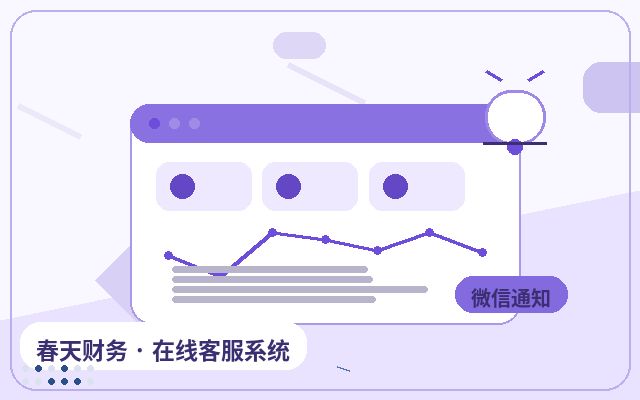
Common Features of AI + Human Customer Service Systems (Including Collaboration with WeChat Notifications)
Understanding core features is key to pre-deployment evaluation. The table below lists common system features and how they collaborate with WeChat notifications:
| Feature Module | Feature Description | Collaboration with WeChat Notifications |
|---|---|---|
| Intelligent Automated Reception | AI bot provides 7x24 automatic responses to common questions, with knowledge base learning capabilities. | When the AI cannot resolve an issue or the customer requests a human, the system can send a WeChat notification to alert an available agent. |
| Human Agent Workspace | Agents handle conversations from multiple channels (web, app, etc.) in a unified interface, with support for quick replies and customer info sidebar. | When an agent is offline or busy, new conversation assignments can trigger WeChat notifications to ensure urgent inquiries are not missed. |
| Lead Identification and Assignment | Automatically identifies sales leads and tags them based on preset keywords, conversation rounds, etc. | Core Collaboration Point: Once a high-intent lead is identified, the system can automatically send a WeChat notification to the designated salesperson, including basic customer info and conversation summary, enabling near-instant follow-up. |
| Data Statistics and Analysis | Records data such as conversation volume, response time, customer satisfaction, and lead conversion rate. | Daily/weekly key data reports (e.g., new lead count) can be pushed to management groups via WeChat, allowing teams to quickly grasp operational status. |
| Knowledge Base Management | Maintains and optimizes the Q&A knowledge base used by the AI bot to improve automatic response accuracy. | When the AI encounters a new question it cannot answer, it can send a WeChat notification to the knowledge base administrator, prompting them to add information and form an optimization loop. |
Basic Deployment Process for an AI + Human Customer Service System
Question: What steps are typically involved in deploying a system from scratch?
Direct Answer: The main process includes: needs assessment and selection, account setup and configuration, system integration and testing, team training, official launch, and continuous optimization.
Additional Explanation: Before deployment, businesses need to clarify their core needs (e.g., inquiry volume, required channels, necessity of integration with third-party tools like WeChat notifications). When selecting a system, consider its AI capabilities, ease of integration, flexibility of notification mechanisms, and cost structure. For example, solutions like the Spring Online Customer Service System offer a starting cost of 25 yuan per month, with unlimited human agents, AI automated reception, and WeChat notifications upon lead acquisition, providing a low-cost option for small and medium-sized businesses to deploy their own customer service system. After deployment, the focus is on continuously training the AI model and optimizing notification rules based on initial conversation data.
Frequently Asked Questions
1. Is the integration of the customer service system with WeChat notifications complicated?
Usually not. Mainstream customer service systems provide standard Webhook interfaces or pre-configured integration pages. Businesses simply need to fill in WeChat-related settings (e.g., the Webhook address of a WeCom bot) in the system backend and set conditions for triggering notifications (e.g., "new lead generated," "customer waiting timeout") to complete the integration. The entire process may take just a few minutes to half an hour.

2. Will AI customer service completely replace human agents?
No. The core role of AI customer service is "assistance" and "pre-filtering." It excels at handling standardized, repetitive inquiries, significantly reducing the burden on human agents and ensuring responses during non-business hours. However, complex issues requiring emotional communication or deep decision-making still need human intervention. The two are collaborative, not substitutive.
3. How can we ensure the timeliness of WeChat notifications and prevent them from being missed?
Optimization can be done in two ways: First, fine-tune notification rules to trigger notifications only for high-priority events (e.g., high-intent leads, VIP customer access, complaint keywords) to avoid information overload. Second, establish a team collaboration mechanism, such as rotating duty among the sales team to ensure that WeChat lead notifications at any time are handled by a designated person. The system backend should also maintain complete notification logs for traceability.
Conclusion
Deploying an AI + human customer service system, especially achieving efficient collaboration with instant messaging tools like WeChat notifications, is an important step for modern businesses to improve customer service response speed and sales conversion rates. Before deployment, businesses should focus on evaluating their own inquiry scenarios, clarifying their needs for AI capabilities and notification mechanisms, and selecting a solution that is flexible, configurable, and stable to integrate. Successful deployment is not just about technical launch but also about continuous optimization of the AI model and collaboration processes based on data, ultimately building a seamless, agile customer service system.