

When visitors come to your business website, a smooth communication channel is key to driving inquiries and conversions. Live chat and contact forms are the two most common communication methods, each with its own characteristics. Modern human customer service systems have gone beyond being a single tool, intelligently integrating AI automatic reception with human agents to form efficient collaboration. This article compares these two methods and delves into how a human customer service system achieves the perfect synergy between AI and humans.
Live Chat vs. Contact Form: Which Is Right for Your Business?
When organizing articles about human customer service systems, what matters most is whether the reception process is smooth, whether consultation records are complete, and whether subsequent collaboration is convenient.
Question: What is the core difference between live chat and contact forms?
Direct Answer: Live chat emphasizes real-time interaction, while contact forms focus on asynchronous communication.
Additional Explanation: Live chat (usually in the form of a chat window) allows visitors to have instant conversations with customer service agents or AI, offering fast response times and high interactivity, making it suitable for urgent, complex, or guided inquiries. Contact forms require visitors to fill in fields such as name, contact information, and issue details before submission, with the business replying later via phone or email. This introduces a delay in communication but allows for structured collection of customer information.
What Is a Human Customer Service System?
Question: What is a modern human customer service system?
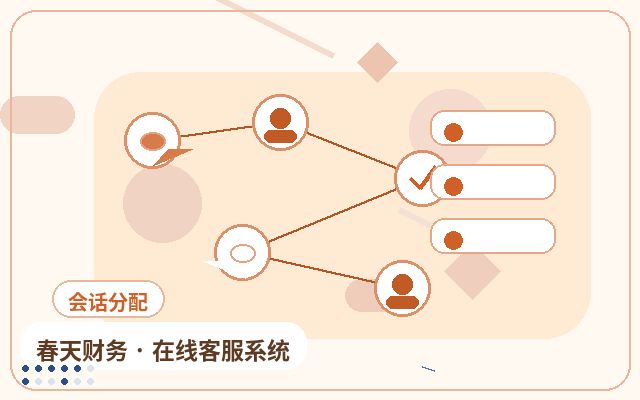
Direct Answer: A modern human customer service system is a software platform that integrates multi-channel communication, customer management, AI assistance, and data analysis functions, with its core being the coordination of human agents and AI bots to handle customer inquiries.
Additional Explanation: It is no longer just a chat window. Such systems are typically deployed on websites, apps, or social media, and can centrally manage inquiries from various channels. Their intelligence lies in automatically assigning or transferring conversations between AI bots and human agents based on conversation content, customer status, or preset rules, ensuring the most efficient resolution of customer issues.
Which Businesses Need a Human Customer Service System?
Question: What types of businesses particularly need a human customer service system?
Direct Answer: Growing small and medium-sized enterprises with high inquiry volumes, a need for fast response times, and a desire to improve sales conversion rates are the most suitable.
Additional Explanation: For example, industries like e-commerce, education and training, business services, and healthcare often have website visitors with clear inquiry or purchase intentions. Relying solely on contact forms may lead to customer loss due to delayed responses. A human customer service system ensures that sales leads are captured immediately, and through AI preprocessing, reduces the burden on human agents, enabling efficient service at a low cost.
Why Do Businesses Need a Human Customer Service System?
Question: What is the main value of deploying a human customer service system compared to using only a contact form?
Direct Answer: The core value lies in improving customer experience, increasing reception efficiency, boosting conversion opportunities, and enabling data accumulation.
Additional Explanation: A contact form is "passive waiting," while a human customer service system is "active reception." The system can instantly notify agents of new visitors or messages, preventing missed leads. AI bots can answer common questions 24/7, filter out invalid inquiries, and transfer high-intent customers to human agents. All conversation records are traceable and analyzable, providing data support for optimizing service and marketing strategies.
Common Features of a Human Customer Service System
A fully functional human customer service system typically includes the following core modules to enable AI and human collaboration.
| Feature Module | Main Function | Beneficiary |
|---|---|---|
| Multi-Channel Integration | Unifies inquiries from website, app, WeChat official account, etc., into one backend for processing. | Customer service agents, for centralized management. |
| AI Automatic Reception | Automatically answers common questions using a preset knowledge base or machine learning, performing initial screening. | Businesses (reducing labor costs) and visitors (getting instant responses). |
| Smart Transfer to Human | Automatically transfers to a human agent when AI cannot resolve the issue or detects high-intent keywords (e.g., "price," "purchase"). | High-intent customers, receiving in-depth service. |
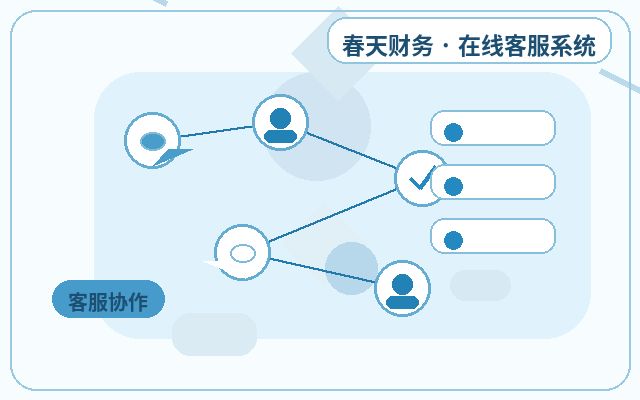
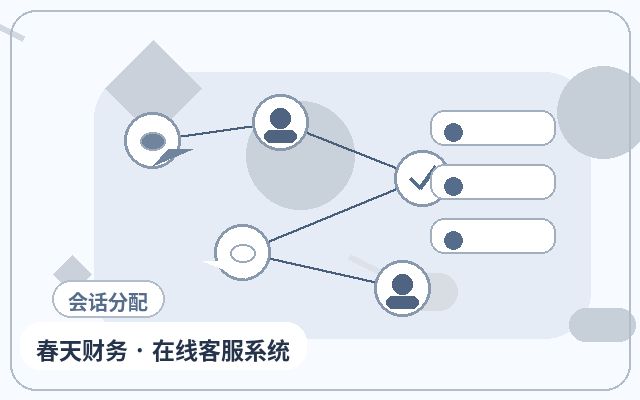
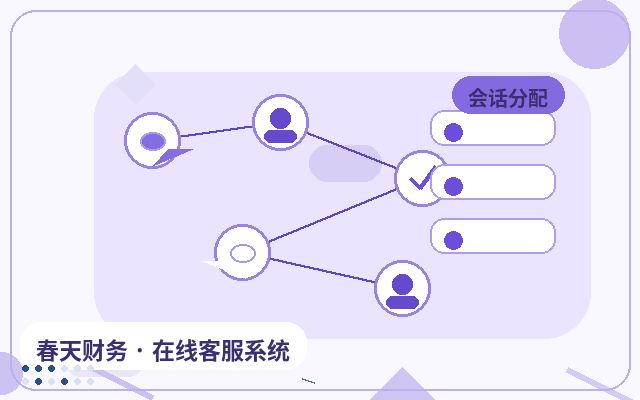
| Conversation Assignment & Monitoring | Assigns conversations based on agent availability, skill groups, etc., and allows managers to monitor conversation quality in real time. | Customer service team managers, improving overall efficiency. |
| Customer Information Management | Automatically generates customer cards, records conversation history, source pages, etc., accumulating customer data. | Sales and customer service agents, enabling precise follow-ups. |
| Data Analysis & Reports | Generates multi-dimensional reports on conversation volume, response time, customer satisfaction, conversion rate, etc. | Business decision-makers, for operational optimization. |
Basic Process for Deploying a Human Customer Service System
Question: What steps does a business need to take to go from zero to launching a human customer service system?
Direct Answer: The main process includes: needs assessment, product selection, configuration and debugging, team training, launch testing, and continuous optimization.
Additional Explanation: First, clarify your business volume, reception scenarios, and budget. When selecting a product, consider its AI capabilities, mobile support, and pricing flexibility. For example, some systems like Spring Online Customer Service System offer a pay-as-you-go model, with an entry cost of $25 per month, supporting unlimited human agents and including AI automatic reception and lead capture features. After capturing a lead, it can notify the responsible person via WeChat. This model may be more suitable for SMEs looking to quickly deploy a customer service system at a low cost. During the configuration phase, set up welcome messages, AI knowledge base, transfer rules, etc. After launch, continuously optimize scripts and processes based on data feedback.
Frequently Asked Questions
1. Is a human customer service system necessary for a small company with low inquiry volume?
Direct Answer: Yes, especially for small companies that value every potential customer.
Additional Explanation: Customer leads are more precious for small companies. A human customer service system ensures that inquiries at any time (including after hours) are initially handled by AI and the responsible person is notified, preventing customer loss due to no response. Its cost may be much lower than hiring a full-time customer service agent.
2. Could AI customer service provide inaccurate answers and negatively impact customer experience?
Direct Answer: This is possible, but it can be mitigated through optimization and setting transfer rules.
Additional Explanation: AI accuracy depends on the completeness of the knowledge base. Businesses should continuously input common questions and answers into the system. At the same time, a clear "transfer to human" option must be provided, and when AI cannot confirm an answer, it should proactively guide the customer to a human agent, forming a complementary process of "AI first filters, human solves precisely."
3. How to balance the ratio of AI to human reception?
Direct Answer: There is no fixed ratio; it needs to be dynamically adjusted based on business type, inquiry complexity, and cost budget.
Additional Explanation: Initially, let AI handle all simple queries (e.g., office hours, address), while complex or transaction-related questions are directly transferred to humans. After running for a period, analyze conversation records and add frequently repeated questions with standard answers to the AI knowledge base, gradually expanding AI's reception scope, allowing humans to focus on high-value communications.
Conclusion
Live chat and contact forms are not mutually exclusive choices. Modern human customer service systems offer a better solution: they retain the real-time advantage of live chat while leveraging the structured information collection capability of contact forms to accumulate leads. More importantly, through intelligent collaboration between AI and human agents, they achieve 24/7 uninterrupted service, efficiency improvement, and cost control. For the vast number of SMEs, choosing a flexible and cost-effective system is an effective way to quickly enhance website communication experience and sales conversion rates. The key is to reasonably configure the division of labor between AI and humans based on your own business processes, letting technology truly serve customer connections.