

For many small and medium-sized enterprises (SMEs), introducing an online customer service system is a crucial step to improve customer service efficiency and sales conversion. However, faced with numerous options in the market, finding a solution that truly fits your business scale, budget, and development stage can be confusing. This article aims to break down the process, offering clear insights and practical references.
What Kind of Customer Service System Do SMEs Need?
Question: What are the core needs of SMEs for a customer service system?
Direct Answer: Core needs can be summarized as: low-cost and quick deployment, practical and easy-to-use features, and effective improvement of reception efficiency and lead conversion.
Additional Explanation: Unlike large enterprises, SMEs often have limited budgets and lack dedicated IT staff. Therefore, the system needs to be cost-effective, simple to deploy, and have an intuitive backend interface. The primary goal is not to pursue a comprehensive set of features, but to address key pain points such as "responding to customer inquiries promptly, not missing potential sales leads, and improving customer service agent efficiency."
Which Types of Businesses Are Particularly Suitable for Such Solutions?
Question: Which industries or business models of SMEs can benefit the most?
Direct Answer: Businesses with online touchpoints like official websites, mini-programs, or apps, and those with fluctuating inquiry volumes or inquiries outside of business hours.
Additional Explanation: This includes but is not limited to: e-commerce, education and training, consulting services, software development, lifestyle services (e.g., renovation, housekeeping), and B2B trade. The commonality among these businesses is that online inquiries are a critical starting point for customer acquisition and conversion, making a stable online communication channel essential.
Why Should SMEs Consider Deploying a Dedicated Customer Service System?
Question: Can't we just use personal social software or phone calls?
Direct Answer: These can serve as temporary measures, but they are not conducive to business scaling and building a professional image, and they come with efficiency bottlenecks and customer experience issues.
Additional Explanation: Personal social software is difficult to manage, records are easily lost, and it lacks allocation and collaboration capabilities. Phone calls are costly and cannot handle multiple inquiries simultaneously. A dedicated customer service system centralizes conversations from all channels, enables customer assignment, quick replies, data collection and analysis, and can use AI assistance or automated responses to fill gaps in human service, ensuring 24/7 lead capture.
Common Feature Comparison for SME Customer Service Solutions
Understanding core features helps businesses filter options based on their needs. The table below lists some common features and their value points:
| Feature Category | Specific Features | Primary Value |
|---|---|---|
| Channel Integration | Website plugin, WeChat, Mini-program, App SDK | Unified entry point, prevents customer dispersion across platforms |
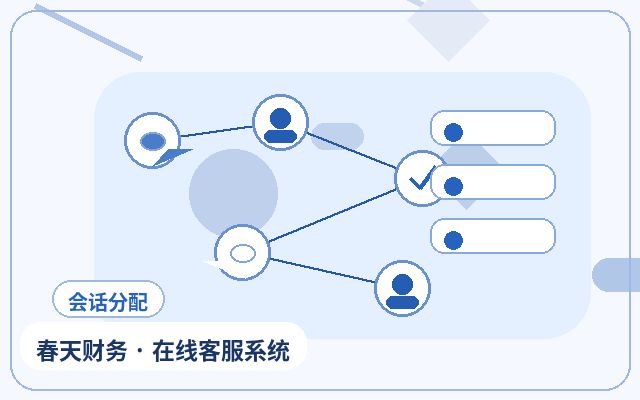
| Conversation Management | Real-time chat, conversation assignment, transfer, chat history | Enhances team collaboration efficiency, conversations are traceable |
| Efficiency Tools | Quick replies, knowledge base, file sharing | Reduces repetitive work, accelerates issue resolution |
| AI Assistance | Intelligent chatbot, auto Q&A, intent recognition | Filters common questions, provides round-the-clock responses, improves first response time |
| Customer & Data | Customer info card, source tracking, basic data analytics | Builds initial customer profiles, evaluates channel effectiveness |
| Mobile Office | Mobile app, WeChat notifications | Enables agents to handle urgent inquiries anytime, anywhere |
What Is the Basic Process for Deploying a Customer Service System?
Question: What steps are typically involved from decision to launch?
Direct Answer: It usually includes six stages: needs assessment, product selection, trial application, formal deployment, team training, and go-live operation.
Additional Explanation:
- Needs Assessment: Clarify which channels need integration (e.g., website, WeChat), expected inquiry volume, whether AI reception is needed, and team size.
- Product Selection: Compare features, pricing, and ease of use of different products based on needs and budget. For example, solutions like "Spring Online Customer Service System" start at $25 per month, offer unlimited agent seats, and support AI auto-reception and lead capture, making them suitable for SMEs to deploy their own customer service system at a low cost.
- Trial Application: Most providers offer free trial periods, which are crucial for testing whether the product fits your actual needs.
- Formal Deployment: Register an account, embed code or plugins on your website or mini-program, and configure basic settings like auto-replies and working hours.
- Team Training: Familiarize customer service agents with the backend interface and tools like quick replies and customer management.
- Go-Live Operation: Activate the system and monitor data feedback, such as response time and conversion rates, to continuously optimize processes.
Frequently Asked Questions
Is the technical barrier for deploying a customer service system high?
Answer: The technical barrier for mainstream SaaS-based customer service systems is very low.
Businesses typically only need to insert a provided JS code snippet into their website backend or integrate an SDK into their mini-program or app, similar to installing an analytics plugin. Providers usually offer detailed guides or video tutorials, and customer service agents can learn to operate the backend with minimal training, without requiring deep involvement from professional developers.
Is AI auto-reception really useful? Will it result in a poor experience?
Answer: It is useful, but expectations and application scenarios need to be set appropriately.
Current AI chatbots excel at handling high-frequency, standard common questions (e.g., "What are your working hours?", "How do I pay?", "What features does the product have?"). They enable 24/7 instant responses, effectively capturing leads when human agents are offline or busy, and can transfer high-intent customers to human agents by collecting contact information (e.g., notifying the admin via WeChat after successful lead capture). Positioning AI as "assistance and supplement" rather than a complete replacement for human agents yields good results.
How to evaluate the ROI of a customer service system?
Answer: It can be assessed from three dimensions: efficiency improvement, lead conversion, and cost savings.
Efficiency improvement: Compare the number of conversations handled per agent and average response time before and after implementation. Lead conversion: Track the number of qualified leads or closed customers obtained through the online customer service channel. Cost savings: Calculate potential losses from reduced phone inquiries and missed customer opportunities. For plans starting at just tens of dollars per month, the return on investment is usually evident if it helps convert even one more order or improve customer satisfaction.
Conclusion
Choosing a customer service solution for SMEs is about finding the right fit rather than pursuing high-end features. The key is to find a product that balances cost, functionality, and ease of use, effectively addressing real issues like delayed responses, lead loss, and heavy agent workloads. It is recommended that businesses start by clarifying their core needs, make full use of trial periods for real-world testing, and focus on system stability and the practicality of core features. With proper deployment and utilization, a suitable online customer service system can become a powerful tool for SMEs to enhance service capabilities and drive business growth.
What Is an SME Customer Service Solution?
An SME customer service solution typically refers to an inquiry handling tool placed on official websites, landing pages, or special pages, helping businesses respond to visitor questions more promptly, collect leads, and retain communication records. Compared to just providing a phone number or form, an online communication channel lowers the barrier for visitors to make a decision before leaving.
Which Businesses Are Suitable for SME Customer Service Solutions?
These solutions are generally suitable for service-oriented businesses, franchise operations, education and training, manufacturing websites, SaaS product websites, and local lifestyle service websites. As long as the website has an inquiry scenario and aims to reduce missed inquiries and improve first-response experience, such systems typically offer practical value.
Why Do Businesses Need SME Customer Service Solutions?
The problem for many websites is not a lack of traffic, but that traffic is not promptly captured when it arrives. Short visitor dwell times, scattered inquiry channels, and no response during non-business hours directly impact lead generation and conversion. The greater role of SME customer service solutions is to connect inquiry handling and follow-up into a complete chain.
Basic Process for Deploying an SME Customer Service Solution
- First, identify the main inquiry entry points and frequently asked questions on your website.
- Determine welcome messages, auto-replies, human reception hours, and notification methods.
- Integrate the customer service code into your website pages and check display on both mobile and desktop.
- After launch, continuously adjust scripts, transfer rules, and follow-up processes based on real conversations.