

For many small and medium-sized businesses (SMEs), the official website is a vital channel for acquiring potential customers. However, a large number of inquiries are lost due to untimely or ineffective responses, becoming a hidden barrier to business growth. This article focuses on how to leverage technology, particularly auto-reply customer service systems, to seize these fleeting business opportunities.
What is Auto-Reply Customer Service?
Question: Is auto-reply customer service just a chatbot?
Answer: Not exactly. It's a more comprehensive solution.
Additional Explanation: Auto-reply customer service systems typically integrate rule-based triggers, keyword matching, and AI semantic understanding. They not only provide 24/7 instant automated responses but also intelligently route conversations to human agents and record complete customer interaction histories, making them a tool to enhance website communication experience and conversion efficiency.
Which Businesses Are Suitable for Auto-Reply Customer Service?
Question: What types of businesses most need to deploy auto-reply customer service?
Answer: Businesses with fluctuating inquiry traffic, limited human agent resources, and a focus on online lead generation.
Additional Explanation: This is especially suitable for startups and SMEs in industries like e-commerce, education and training, enterprise services, and software development. When visitors initiate inquiries during off-hours or when agents are busy, the system can automatically respond, preventing customers from leaving due to waiting.
Why Businesses Need Auto-Reply Customer Service to Reduce Loss
Question: What are the main causes of website inquiry loss?
Answer: The core reasons are untimely responses and inefficient information filtering.
Additional Explanation: Specific manifestations include: 1) No response during unattended hours; 2) Overwhelmed agents during peak times leading to delays; 3) Repetitive basic questions consuming agent energy; 4) Inability to effectively identify and prioritize high-intent customers. Auto-reply customer service addresses these issues by ensuring every inquiry entry point has a "person" to respond and quickly filters out effective leads.
Key Features of Auto-Reply Customer Service Explained
When selecting a system, understanding its core functional modules is crucial. The table below outlines key features and their role in reducing inquiry loss:
| Feature Module | Primary Function | How It Reduces Loss |
|---|---|---|
| 24/7 Automated Reception | Responds to visitor inquiries around the clock via preset Q&A or AI dialogue. | Eliminates response gaps during non-business hours, capturing potential customers at night, on holidays, etc. |
| Intelligent Conversation Routing | Automatically transfers conversations to appropriate skill groups or human agents based on customer issues, source pages, etc. | Quickly matches professional agents, reducing customer frustration from multiple transfers or waiting. |
| Visitor Behavior Tracking & Identification | Records visitor browsing paths, dwell time, visit frequency, etc. | Helps agents understand customer interests in advance, enabling personalized communication and improving conversion rates. |
| Automated Lead Collection & Alerts | Automatically captures visitor contact information (e.g., phone numbers) and notifies responsible parties via instant tools like WeChat. | Ensures high-intent leads are not missed, enabling quick follow-up and shortening the conversion cycle. |
| Data Statistics & Analysis | Analyzes data such as conversation volume, response time, conversion rates, and common questions. | Helps businesses continuously optimize auto-reply scripts and human service processes, improving reception quality at the source. |
Basic Process for Deploying Auto-Reply Customer Service
Question: How can SMEs quickly launch an auto-reply customer service system?
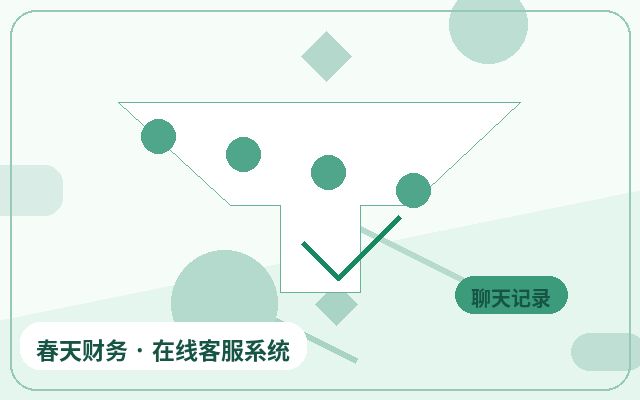
Answer: The typical process follows: "Assess needs - Choose a trial - Configure and launch - Optimize iteratively."
Additional Explanation: First, clarify your core needs regarding response speed, lead management, and budget. Second, choose a system that offers a free trial and is easy to configure for testing, focusing on the accuracy and usability of auto-replies. For example, some systems like Spring Online Customer Service, starting at $25 per month, offer unlimited agent seats, AI auto-reception, and automated lead capture, with WeChat notifications upon successful lead acquisition, making them potentially suitable for SMEs looking to launch a customer service system at a low cost. Then, configure welcome messages, FAQ libraries, and routing rules based on your business scenarios. Finally, continuously optimize scripts and processes based on operational data.
Frequently Asked Questions
Will auto-reply customer service feel robotic and affect the user experience?
Early keyword-matching bots did have this issue. However, modern systems often incorporate AI with contextual understanding, making responses more natural. The key is for businesses to carefully set up scripts and clearly inform visitors that they can switch to a human agent, maintaining communication flexibility.
Can auto-reply completely replace human agents?
No, and it doesn't need to. Its core value lies in "handling" and "filtering." It manages standard inquiries, filters out invalid information, and maintains customer interaction before human intervention, freeing human agents from repetitive tasks to focus on complex, high-value communication, achieving human-machine collaboration.
How to measure the effectiveness of auto-reply customer service?
Focus on key metrics: 1) Total website conversations: Whether auto-reception stimulates more inquiries; 2) Average human agent response time: Whether it shortens due to diversion; 3) Effective lead capture rate: The quantity and quality of leads automatically captured; 4) Off-hours inquiry conversion rate: Measuring the value of 24/7 reception.
Conclusion
Reducing website inquiry loss is essentially about improving customer reach efficiency and communication experience. For resource-constrained SMEs, deploying a practical and cost-effective auto-reply customer service system is a viable strategy. It is not just a "response tool" but also a "lead generation engine" and "data hub." By automating initial inquiry handling and intelligently screening high-intent customers, businesses can more stably capture every potential business opportunity at a lower cost, laying a solid foundation for business growth.