

Why Promotional Pages Need Live Customer Service
Promotional pages on lead generation websites—such as landing pages, campaign pages, and event pages—are designed to attract traffic, spark interest, and drive conversions. However, these pages are static and cannot address real-time questions, alleviate concerns, or guide decision-making. Live customer service fills this gap by responding promptly to user needs, thereby increasing conversion potential.
Core Strategy: Seamless Integration of Page Guidance and Customer Service
The ideal collaboration model is: the page showcases key selling points and calls to action, while customer service handles personalized questions that the page cannot cover. The user journey from viewing the page to initiating a chat should be clear and smooth.
Preparations on the Page Side
- Prominent and natural chat entry points: Place live chat icons or buttons in key page locations (e.g., above the fold, near call-to-action buttons, at the bottom) so users don't have to scroll to find them.
- Pre-set common question prompts: Next to the chat entry or within the chat window, list 2-3 of the most likely user questions to encourage quick clicks and reduce typing effort.
- Consistency between page information and customer service scripts: Customer service agents must be fully aware of the services, prices, and timelines promised on the page to avoid contradictions.
Customer Service Implementation
- Quick response: Visitors to promotional pages often have immediate needs. Agents should respond within 30 seconds to prevent user drop-off.
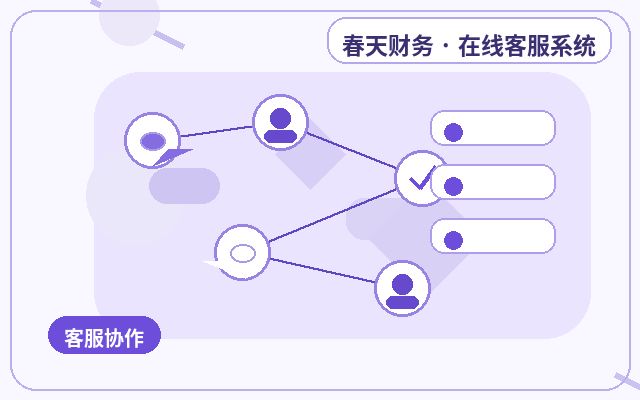
- Proactive identification of page source: Use the customer service system to tag which promotional page the user came from, so agents know what content the user has already seen and can avoid repetition.
- Script alignment with the page: For example, if a user enters via a "Free Trial" button, the agent can say, "You're interested in the specific benefits of the free trial, right? Let me explain in detail."
Common Issues and Solutions in Collaboration
Anticipate and prepare for these common scenarios during actual collaboration.
| Common Issue | Solution |
|---|---|
| User has left the page and forgotten some details | Guide the user to a specific section on the page or send a key screenshot for clarification. |
| Multiple promotional pages generate a surge of inquiries | Estimate traffic in advance, schedule shifts or add temporary agents; set up chatbots for common questions and route complex issues to humans. |
| User asks about something already explained on the page | Instead of saying "It's on the page," summarize the key point and direct them, e.g., "This feature is explained in the middle of the page. Let me give you the highlights..." |
Data Feedback: Using Inquiry Data to Optimize Pages
Live customer service receives a wealth of real user questions daily, which are invaluable for page optimization. For example:
- If many users ask "How is the price calculated?", the page's pricing description may be unclear—consider adding a price range or calculator.
- If users repeatedly ask "How do you compare to Competitor X?", the page may lack a comparison section.
- If users ask "How do I pay?" or "Is it secure?", the page needs more trust signals or security assurances.
We recommend that customer service teams regularly compile high-frequency questions and hold meetings with marketing, operations, and design teams to drive page iterations.
Important Considerations
Frequently Asked Questions (FAQ)
Q: If the promotional page already has extensive information, is customer service still necessary?
Yes. No matter how comprehensive the page is, it cannot address every user's individual concerns. Customer service can provide targeted answers and build trust, especially during the decision-making stage.
Q: What is an appropriate response time for customer service?
Generally, the first response should be within 30 seconds. If that's not possible, at least reply within 1 minute and let the user know, "I'm looking into this; I'll give you a detailed answer shortly."
Q: How can we measure the effectiveness of customer service collaboration?
Evaluate using metrics such as inquiry-to-conversion rate (the percentage of inquiries that lead to a desired action), user satisfaction ratings, and a decreasing trend in repetitive questions.
Conclusion
For lead generation websites, the key to effective collaboration between promotional pages and live customer service lies in consistent information, clear entry points, timely responses, and a closed data loop. The page handles breadth, while customer service handles depth. Together, they better serve visitors and improve the return on promotional efforts. We recommend that website operations teams regularly adjust collaboration details based on page types and traffic, making customer service a dynamic component of promotions.